

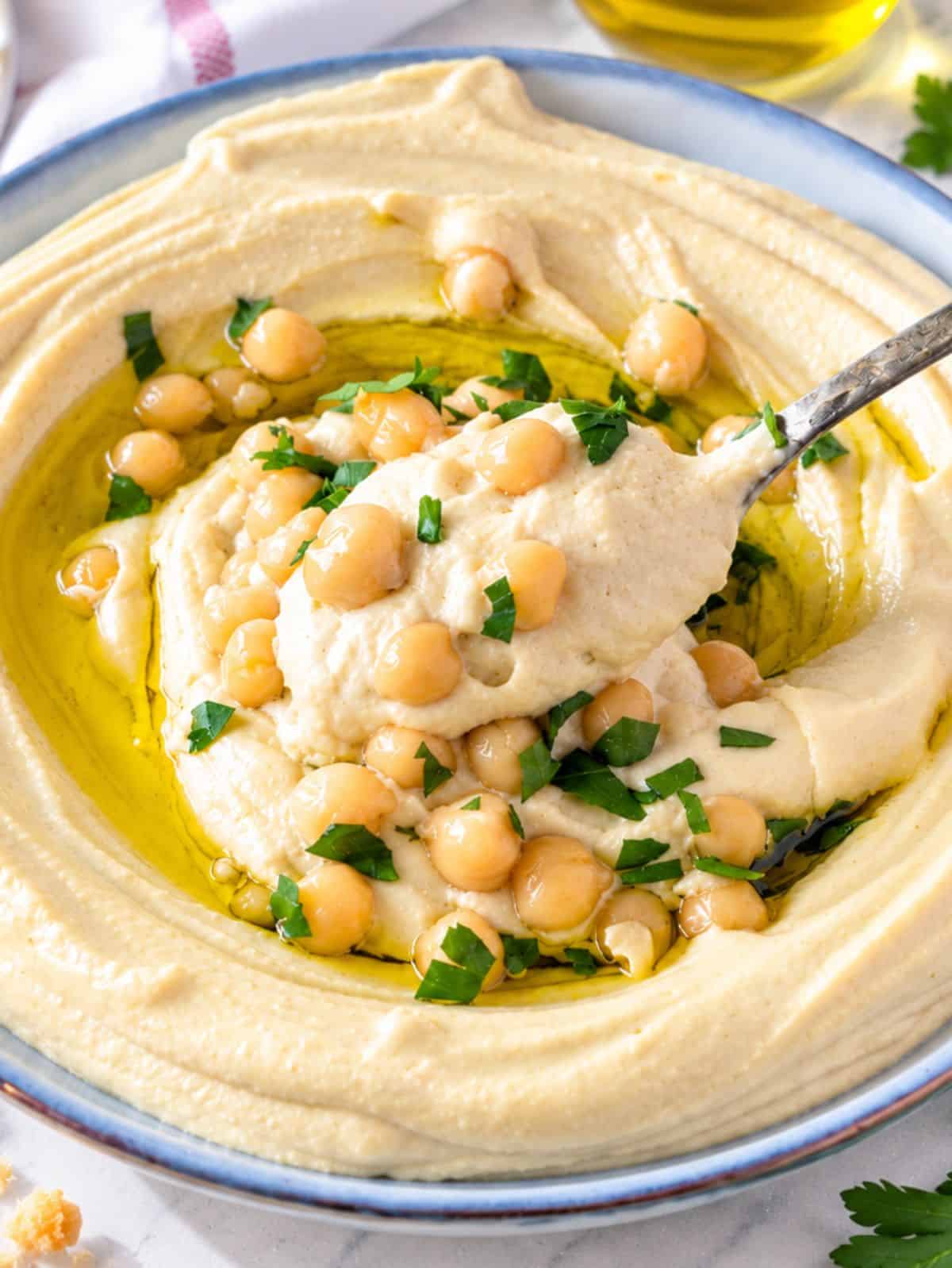
This hummus recipe gives you incredibly smooth, creamy, restaurant-style hummus at home, with simple ingredients and a few techniques that make all the difference.
Turn your hummus into a complete Mediterranean-style meal with warm pita bread, crispy falafel, and Persian cucumber salad.
Don’t Lose This Recipe
Why you’ll love this classic hummus recipe!
Hummus is simple, but a few small details make an enormous difference. 🧆 With tender chickpeas, good tahini, fresh lemon, and extra virgin olive oil, you can make hummus that’s incredibly smooth, creamy, and full of flavor.
Over the years, Louise and I have learned that the secret isn’t adding more ingredients—it’s choosing the right ones and treating them well. Small, very tender chickpeas, silky tahini, and cold aquafaba can completely transform the texture.
It’s also the kind of food we love eating regularly: nutritious, fiber-rich, satisfying, and made with simple plant-based ingredients. 🌱 Chickpeas, tahini, and olive oil make hummus a natural fit for a Mediterranean-style way of eating.
Serve it with crunchy vegetables and warm pita, spread it on sandwiches, or add a generous spoonful to grain bowls and salads. Creamy homemade hummus is one of those simple things that feels surprisingly special. ❤️
P.S: If you love hummus, try a few more Mediterranean favorites: smoky baba ganoush, sweet and savory muhammara, or crunchy dukkah sprinkled over your favorite dips.
Ingredients
Full ingredients and substitutions are in the recipe box below.
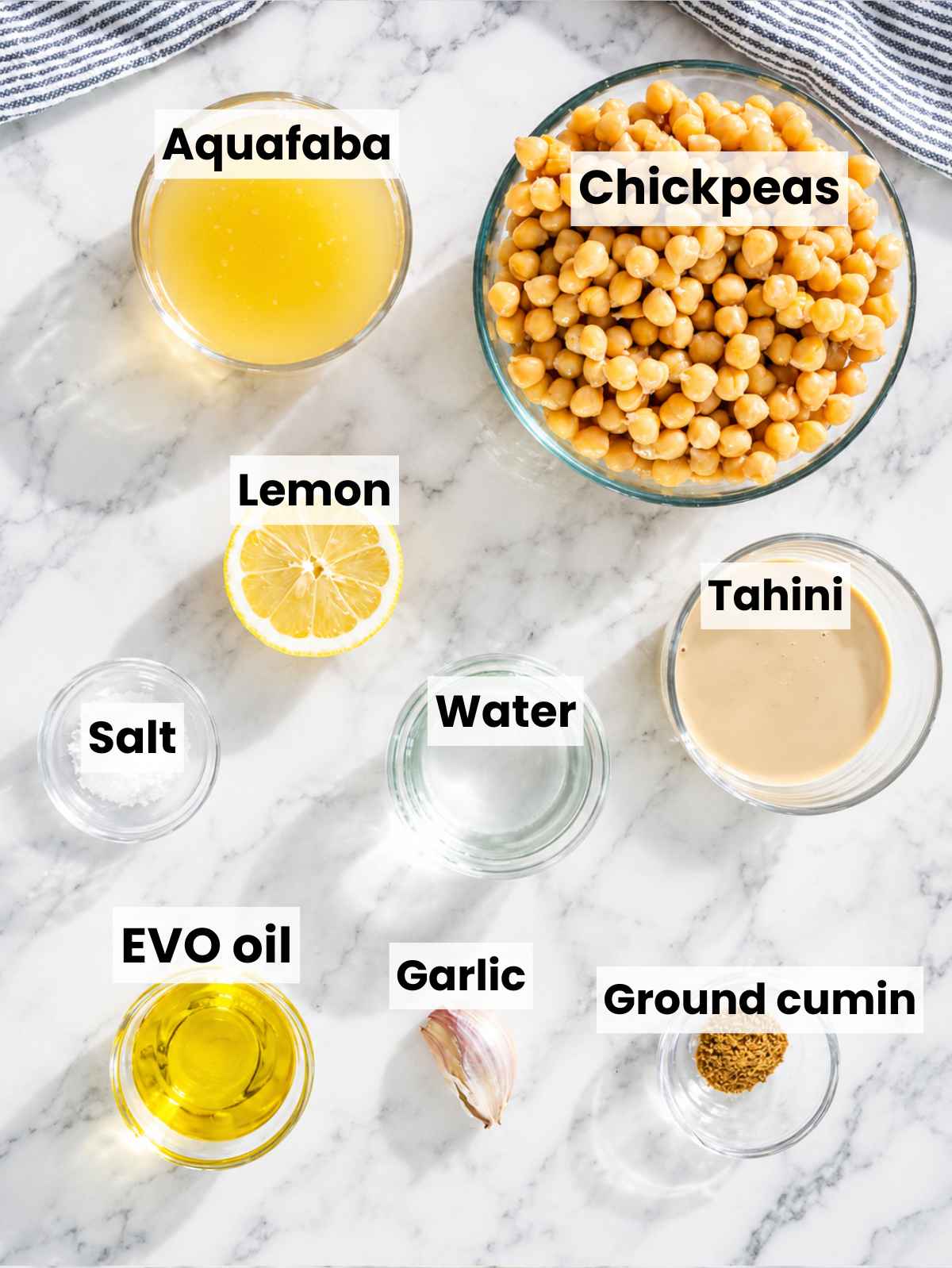
- Chickpeas: small dried chickpeas give you the smoothest homemade hummus; soak and cook until very soft. Substitute canned chickpeas, simmered until almost falling apart.
- Baking soda: helps dried chickpeas soften faster and become extra tender. If using canned chickpeas, add a pinch while simmering them.
- Aquafaba: use the chickpea cooking liquid or liquid from the can, well chilled. It helps create light and fluffy hummus. Substitute cold water if needed.
- Tahini: any tahini will work, but for the smoothest, creamiest hummus, we prefer light, silky, pourable tahini made from hulled sesame seeds. Tahini made from unhulled or whole sesame seeds is usually darker, thicker, and more bitter, while some brands can be quite dense or gritty. If yours is thick, you can still use it; you may simply need a little more cold water to reach a creamy consistency.
- Lemon juice: adds freshness and balances the richness of the tahini. Substitute a small pinch of citric acid dissolved in water.
- Extra virgin olive oil: choose a mild, good-quality oil so it doesn’t overpower the chickpeas.
- Garlic: optional; start with a small amount. If you’re garlic intolerant, simply leave it out—the hummus will still be flavorful.
- Ground cumin: optional and best used sparingly so the chickpeas and tahini remain the main flavors.
- Salt: brings everything together; adjust to taste.
- Flat-leaf parsley: adds freshness and color for serving. Substitute cilantro or simply omit it.
How to make the best hummus
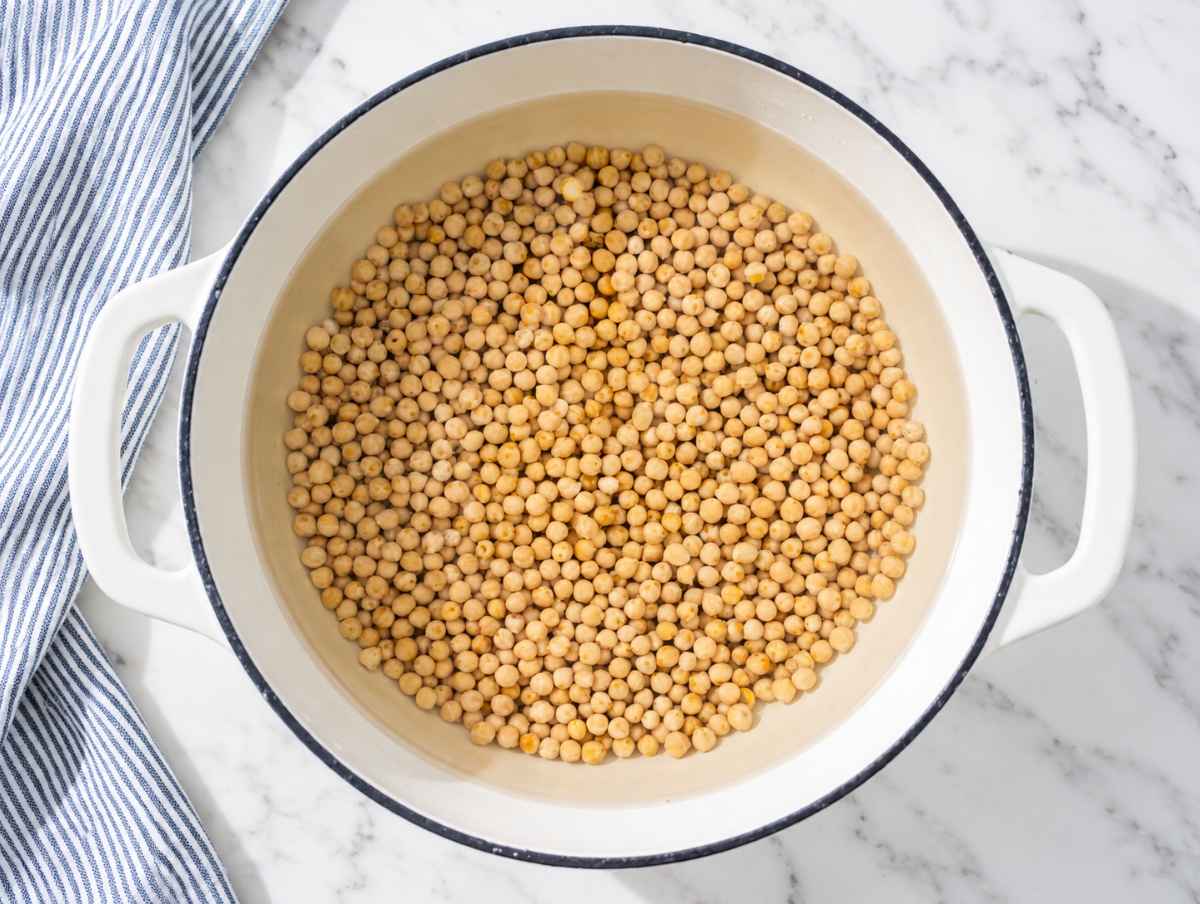
1. Prepare the chickpeas
For the smoothest hummus, the chickpeas should be very soft, almost falling apart, and cold before blending.
Using canned chickpeas: If they’re already very soft, use them as they are. If they’re firm, add 2 cans (15 ounces / 400 g each can), including their liquid, to a saucepan. Boil for about 15 minutes until very tender. Cool, then refrigerate the chickpeas in their liquid.
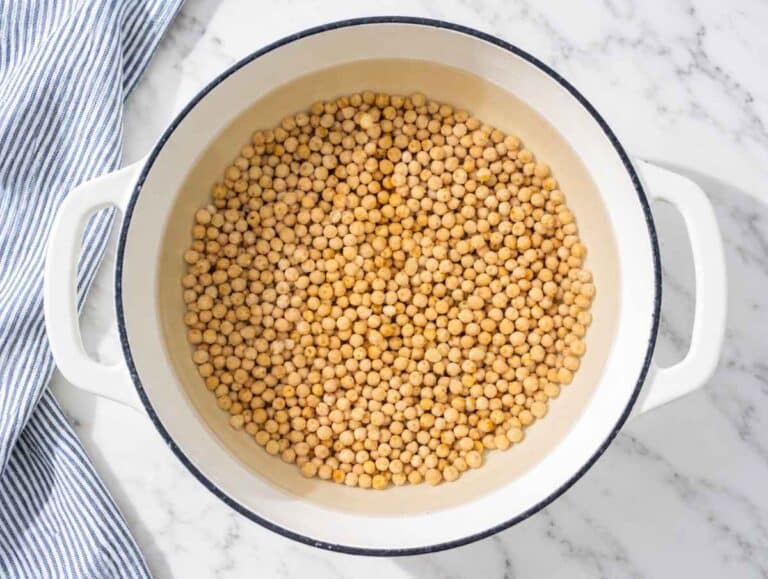
Using dried chickpeas: Soak 1 cup (200 grams) dried chickpeas in plenty of water for 24 hours. Drain and rinse, then boil with 2 teaspoons baking soda and enough fresh water to cover them by about 4 inches (10 cm).
Cook for about 2 hours, or until almost falling apart. Cool, then refrigerate the chickpeas in their cooking water.
2. Blend until creamy
Set aside a few chickpeas for serving.
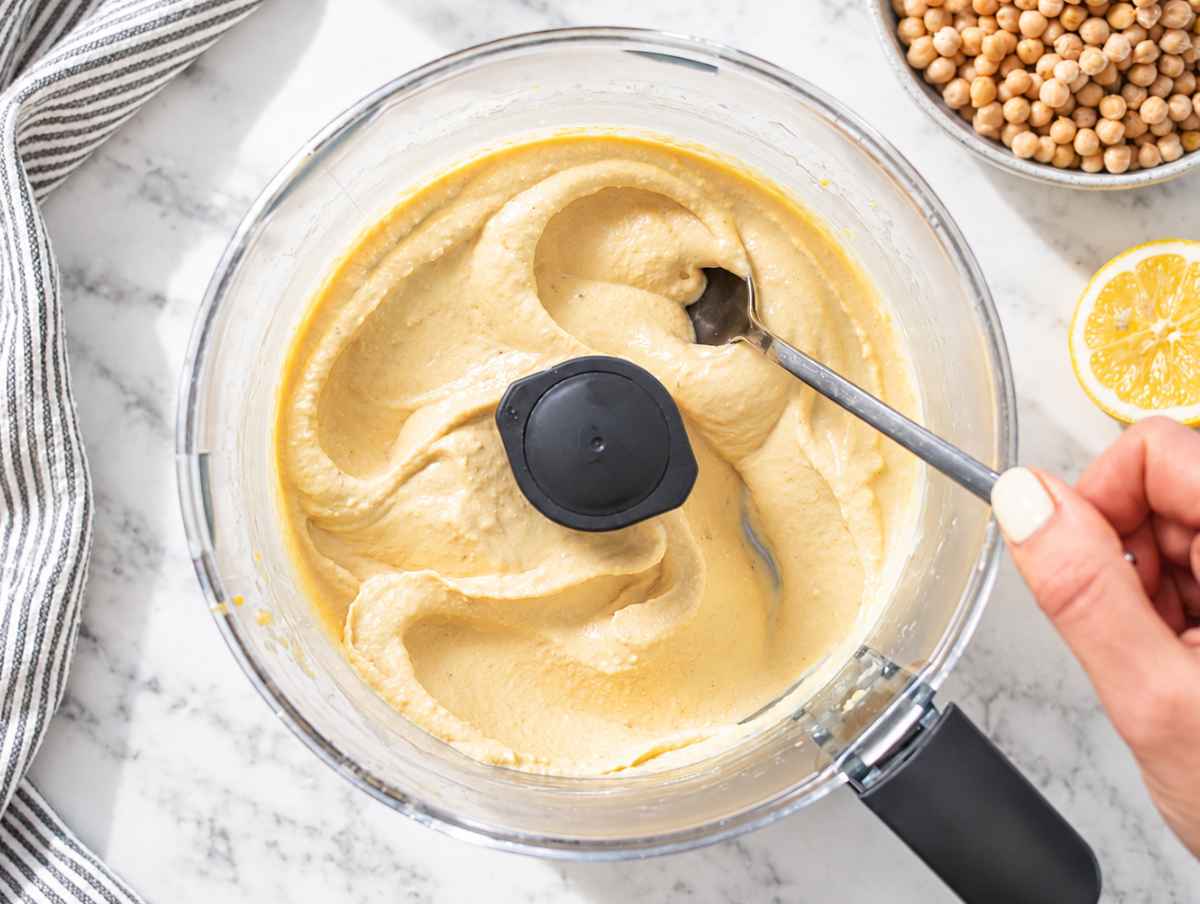
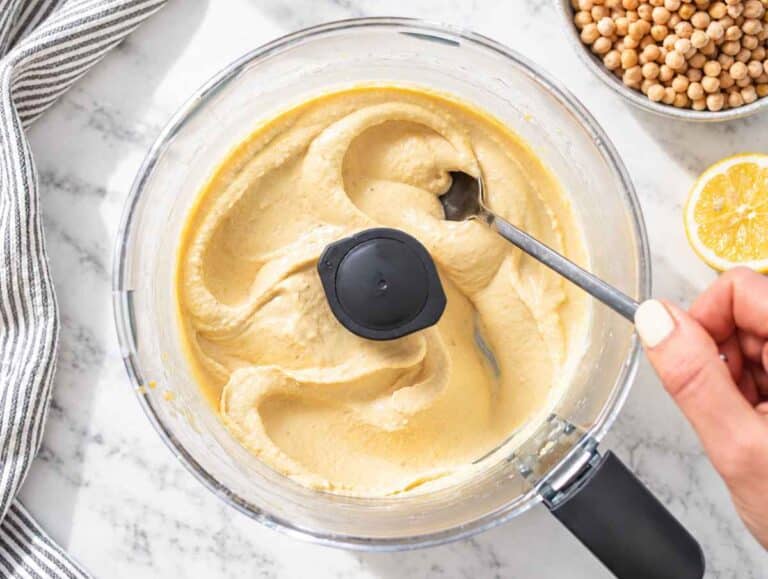
Add the cold chickpeas, cold aquafaba, lemon juice, garlic, and salt to a food processor. Blend for 3 minutes, scraping down the sides as needed.
Add the tahini, cumin, and half the cold water and blend for another 2 minutes.
Pour in the extra virgin olive oil and blend for 2 more minutes, adding the remaining cold water as needed.
Adding the ingredients in stages gives the chickpeas plenty of time to become smooth before we incorporate the tahini and olive oil, producing a lighter, creamier hummus.
Taste and adjust the salt, lemon, and consistency. The hummus should be smooth, creamy, and easy to spread.
3. Garnish and serve
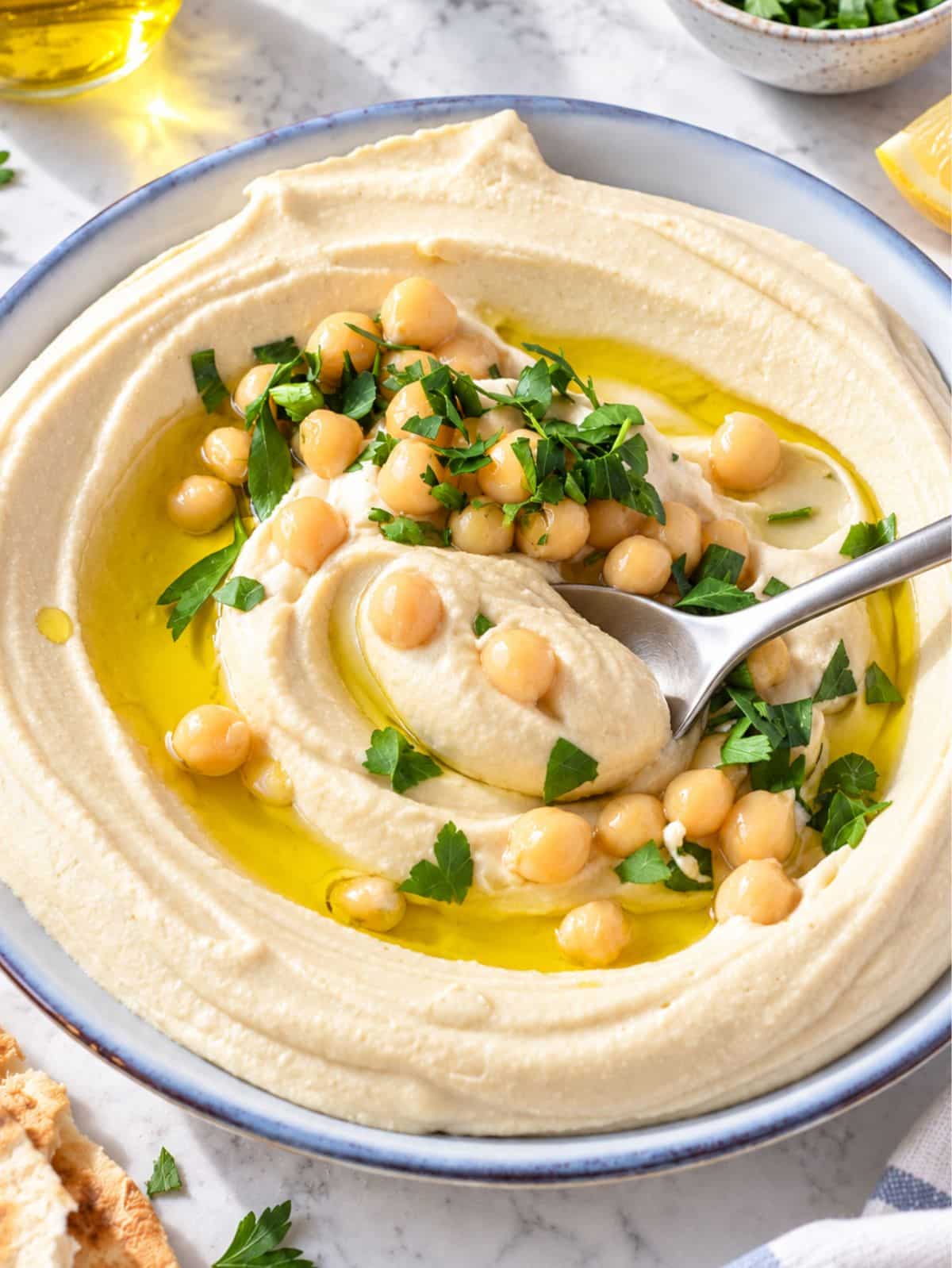
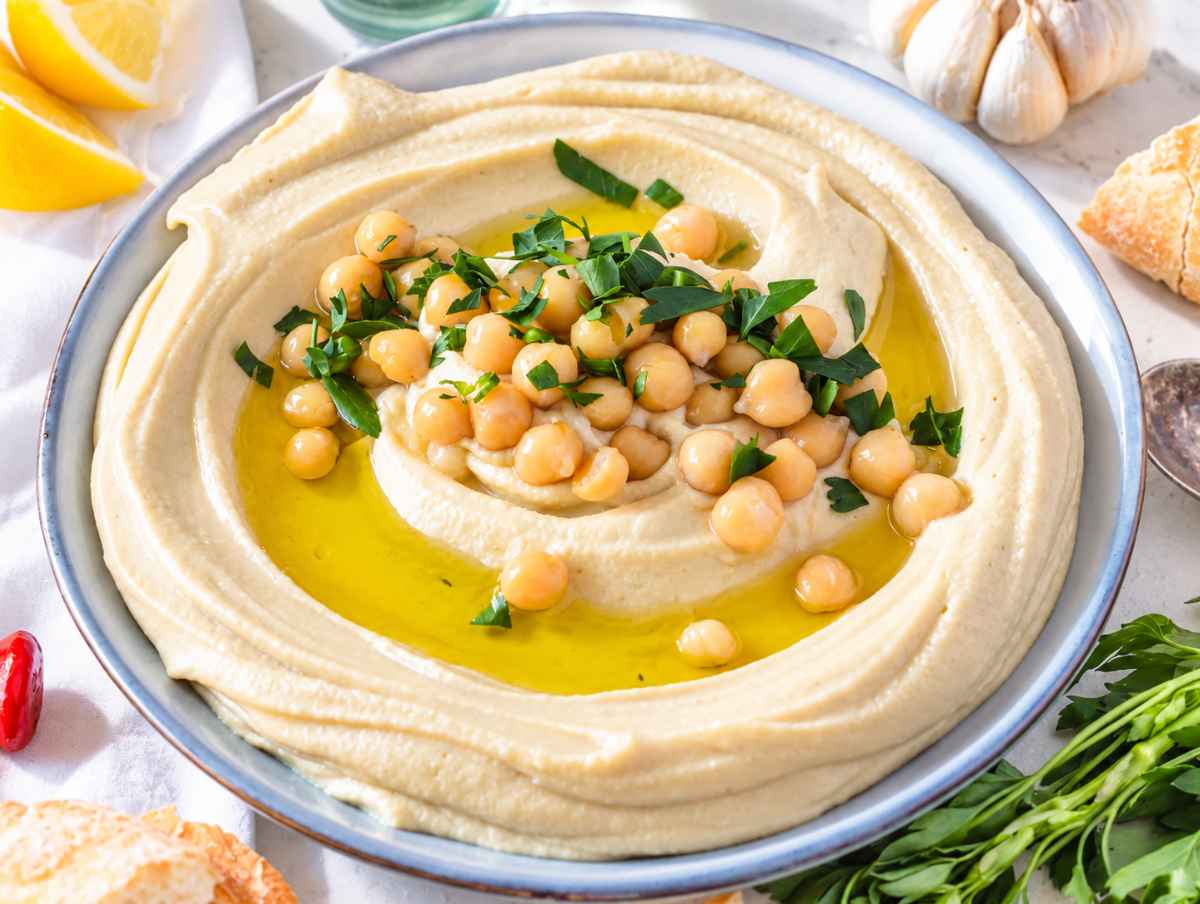
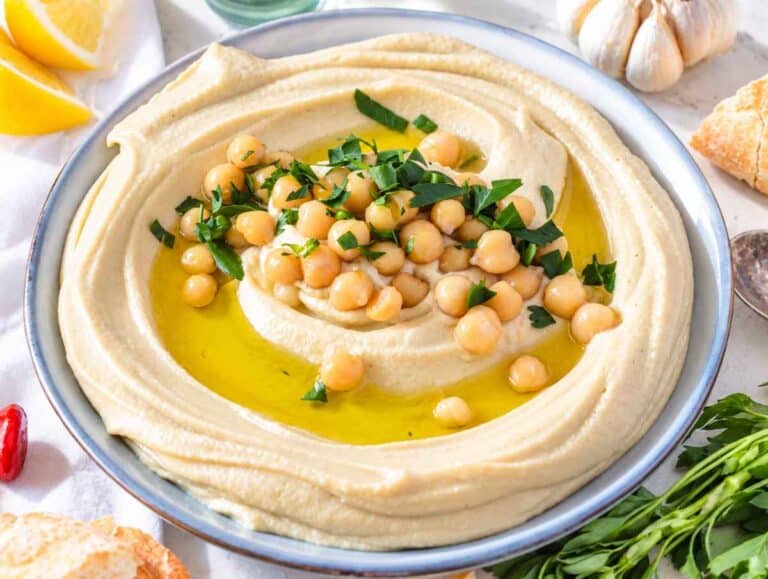
Spread the hummus onto a plate or shallow bowl and make a swirl with the back of a spoon.
Drizzle with extra virgin olive oil and top with the reserved chickpeas and flat-leaf parsley.
Serve with warm pita bread, falafel, fresh vegetables, or your favorite Mediterranean dishes.
Serving Suggestions
- Build a quick lunch: Add a generous scoop to a grain bowl with quinoa or rice, roasted vegetables, greens, and chickpeas or lentils.
- Use it in sandwiches and wraps: Spread hummus instead of mayo, then layer with crunchy vegetables, avocado, greens, or your favorite protein.
- Make a Mediterranean platter: Serve with warm pita, falafel, olives, tomatoes, cucumber, roasted peppers, fresh vegetables, and other dips for an easy meal or appetizer.
- Turn it into a pasta sauce: Loosen hummus with a little pasta water for a quick, creamy hummus pasta sauce that’s perfect for an easy weeknight dinner.
- Bring it to a potluck: Make a large batch, spread it on a serving platter, and garnish just before serving. Bring pita chips and cut vegetables on the side.
- Make it ahead: Prepare the hummus a day or two in advance and refrigerate it. Add the olive oil, chickpeas, parsley, and other garnishes just before serving.
- Keep it ready for the week: Portion hummus into small containers with crunchy vegetables or crackers for easy grab-and-go snacks and lunches.
Tips
- Cook the chickpeas past tender: This is the big one. They should be very soft and almost falling apart, not simply cooked through. Firm chickpeas make grainier hummus.
- Use small chickpeas when you can: Small dried chickpeas tend to have thinner skins and produce a particularly smooth hummus.
- Baking soda helps: When cooking dried chickpeas, baking soda helps soften them thoroughly and speeds up the breakdown that gives hummus its creamy texture.
- Don’t automatically peel the chickpeas: If you use small chickpeas and cook them until extremely soft, peeling every chickpea shouldn’t be necessary. With large, thick-skinned chickpeas, removing some skins can help.
- Choose your tahini carefully: Look for light, silky, pourable tahini made from hulled sesame seeds. Darker, thicker, or gritty tahini still works, but it can give the hummus a heavier texture and stronger, sometimes more bitter flavor.
- Keep everything cold: Chill the chickpeas and aquafaba before blending. Long processing generates heat, so starting cold helps keep the mixture cool as it becomes creamy.
- Save the aquafaba: Don’t throw away the chickpea cooking liquid or canned liquid. It loosens the hummus while adding more chickpea flavor than plain water.
- Blend longer than you think: A quick blitz won’t give you the same silky texture. Blend for at least 7 minutes total, adding the ingredients in stages, to turn very soft chickpeas into smooth, light, almost whipped hummus.
- Add the ingredients in stages: First smooth out the chickpeas, aquafaba, lemon, and salt; then incorporate the tahini and cold water; finish with olive oil. This gives each stage plenty of time to become smooth before adding the next ingredients.
- Add water gradually: Tahini brands and chickpeas vary, so use the recipe as a starting point. Add cold water little by little until the hummus is creamy and easily spreadable.
- Go easy on garlic and cumin: Both become more noticeable as hummus rests. Start small—the main flavors should still be chickpeas and tahini.
- Taste at the end: Adjust lemon and salt only after the hummus is completely blended. A little extra of either can make a surprisingly big difference.
- Expect it to thicken: Hummus becomes firmer as it sits and chills, so it’s okay if it seems slightly looser when freshly blended.
- Serve it generously: Spread it onto a shallow plate, make a well with the back of a spoon, and finish with good extra virgin olive oil, chickpeas, and parsley.
Frequently Asked Questions
The most common causes are chickpeas that aren’t soft enough, thick or gritty tahini, or not blending long enough. Cook the chickpeas until almost falling apart and give the food processor plenty of time to work.
Usually, no. Very soft, well-cooked chickpeas can produce excellent hummus without peeling. If your chickpeas are large with thick skins, removing some of the skins can make the texture smoother.
Starting with cold ingredients helps keep the hummus cool during the long blending process and contributes to a lighter, creamier texture.
Yes, although the flavor and texture will be different. Tahini provides much of the characteristic richness and creaminess of a classic hummus recipe. Here’s our hummus without tahini recipe.
Yes, you can use a high-speed blender, although we prefer a food processor for hummus. A blender’s fast blades and narrow container can heat the mixture quickly, so the hummus may turn out denser, drier, and less airy.
To help compensate, add a few ice cubes and more cold water, a little at a time, while blending. Stop to scrape down the sides as needed and continue until completely smooth and creamy.
Blend in cold water, one tablespoon at a time, until you reach your preferred consistency. This is especially useful when making a creamy hummus dip for pita or vegetables.
Dark, gritty tahini and lower-quality extra virgin olive oil can make hummus taste bitter. Choose a light, silky, pourable tahini made from hulled sesame seeds and a good-quality, mild extra virgin olive oil. Also, go easy on garlic and cumin, as both can become stronger as the hummus rests.
To fix bitter hummus, try adding a little more lemon juice and salt, then blend and taste again. You can also blend in a few more cooked chickpeas or a splash of cold water to dilute the bitterness. If the olive oil is the culprit, avoid adding more to the hummus and use a milder oil for serving.
Store hummus in an airtight container in the refrigerator for about 4 to 5 days. It will thicken as it chills, so stir in a splash of cold water before serving if needed.
You can also freeze hummus for up to 3 months. Thaw it overnight in the refrigerator, stir well, and adjust the consistency with a little water before serving.
More Easy Chickpea Recipes
- Hummus Pasta
- Mediterranean Bowl
- Masabacha
- Chickpea Salad
- Greek Chickpea Salad
- Chickpea Noodle Soup
- Pasta e Ceci
- Chickpea Stew
If you tried this Hummus recipe or any other recipe on our blog, please leave a 🌟 star rating and let us know how it goes in the comments. We love hearing from you!
Hummus Recipe (Easy, Creamy & Authentic)
Ingredients
- 2 cans chickpeas (15 oz / 400 g each), or 3 cups / 460 g cooked, or 1 cup / 200 g dried + 2 teaspoons baking soda
- ⅓ cup aquafaba chickpea cooking liquid or liquid from the cans, chilled
- ⅓ cup tahini preferably light in color, silky, and pourable, made from hulled sesame seeds
- ¼ cup cold water plus more as needed
- 2 tablespoons lemon juice freshly squeezed
- 1 tablespoon olive oil extra virgin
- ½ clove garlic
- ½ teaspoon ground cumin optional
- ¾ teaspoon salt plus more to taste
- 1 tablespoon flat-leaf parsley chopped, for garnish
Instructions
- Prepare the chickpeas: The chickpeas should be very soft, almost falling apart, and cold before blending.For canned chickpeas, use them as-is if very soft. If firm, boil them with their liquid for about 15 minutes until very tender. Cool, then refrigerate in their liquid.For dried chickpeas, soak them in plenty of water for 24 hours. Drain and rinse, then cover with fresh water by about 4 inches (10 cm) and add the baking soda. Boil for about 2 hours, until almost falling apart. Cool, then refrigerate in their cooking water.
- Blend the hummus: Set aside a few chickpeas for serving.Add 2 cans chickpeas, ⅓ cup aquafaba, 2 tablespoons lemon juice, ½ clove garlic, and ¾ teaspoon salt to a food processor. Blend for 3 minutes, scraping down the sides as needed.Add ⅓ cup tahini, ½ teaspoon ground cumin, and half the cold water. Blend for 2 minutes.Add 1 tablespoon olive oil and blend for 2 more minutes, adding more cold water as needed until smooth, creamy, and easy to spread. Taste and adjust salt and lemon juice.
- Garnish and serve: Spread the hummus on a plate or shallow bowl and make a swirl with the back of a spoon.Drizzle with extra virgin olive oil and top with the reserved chickpeas and flat-leaf parsley. Serve with warm pita, falafel, or fresh vegetables.
Notes
- Chickpeas → Small dried chickpeas or canned chickpeas simmered until very soft.
- Baking soda → Use when cooking dried chickpeas; add a pinch when simmering firm canned chickpeas.
- Aquafaba → Cold water.
- Tahini → Any tahini works; if thick, dark, or gritty, add extra cold water as needed.
- Lemon juice → A small pinch of citric acid dissolved in water.
- Extra virgin olive oil → Use a mild, good-quality extra virgin olive oil.
- Garlic → Omit if needed.
- Ground cumin → Optional; omit if preferred.
- Salt → Adjust to taste.
- Flat-leaf parsley → Cilantro or omit.
- Cook chickpeas until very soft: They should be almost falling apart for the smoothest hummus.
- Choose small chickpeas: They tend to have thinner skins and blend more smoothly.
- Use baking soda: It helps dried chickpeas soften and break down.
- Skip peeling when possible: Very soft, small chickpeas usually don’t need peeling; larger, thick-skinned ones may benefit from it.
- Use good tahini: Light, silky, pourable tahini made from hulled sesame seeds gives the creamiest result.
- Keep it cold: Chill the chickpeas and aquafaba before blending.
- Save the aquafaba: It adds chickpea flavor while helping loosen the hummus.
- Blend for at least 7 minutes: Long blending and adding ingredients in stages create a light, silky texture.
- Add water gradually: Use cold water as needed until creamy and easy to spread.
- Go easy on garlic and cumin: Their flavors become stronger as the hummus rests.
- Taste at the end: Adjust lemon and salt after blending.
- Expect some thickening: Fresh hummus can be slightly looser because it firms up as it chills.
- Serve simply: Finish with olive oil, chickpeas, and parsley.
- Store properly: Refrigerate in an airtight container for 4 to 5 days, or freeze for up to 3 months.
Nutrition
Don’t Lose This Recipe

Hi! We are Nico & Louise
We're here to share easy, healthy, and delicious recipes 🌿✨.
Welcome to our blog, we are glad you are here.
Excellent recipe, it amazing good. The best recipe in the world. Thank you formsharing
Wonderful, Margot – thank you so much for your kind words 🎉🥰
This hummus equals the hummus I get at our Persian take away restaurant, especially the texture. It’s nothing like supermarket hummus, and by far the best I ever made myself!
Please add sodium to your nutritional assessments.
Thanks!
Hi Melanie,
thanks for your feedback. I have added the estimated sodium amount.
I hope this helps,
Nico
Delicious! I made your roasted pepper recipe and added them to the hummus as suggested. With veggies and naan for dipping, and a Greek salad, it made a complete meal.
Are there some tahini brands that you recommend? Preferably organic?
Hi Pamela,
this depends greatly on where you live. We use Al-Rabih – which is an imported brand from Lebanon. It is not organic though.
We generally find that brands from the middle east (especially Lebanon) are the best. But they are not organic.
What’s important with tahini is that is made from 100% sesame seeds (the only ingredient on the label), of a runny consistency, and light in color.
Often western organic brands are thick and dark, and they taste bitter.
Hope this helps, and if you find an organic brand that tastes good let us know 🙂
Nico
Greetings from Ont. Canada, Nico…I had to put more salt & lemon juice in mine and yet there’s something else that could be missing in this when I remember eating in Lebanese Restaurant, their hummus was so addictive, but nevertheless it’s still delicious, I guess everybody has their own version
This recipe is AMAZING ! My 1st time making Hummus 🙂
I followed the recipe exactly ~ using canned chick peas & I used 1 huge clove of garlic
I used a high speed pro Blender .
Next time I will only use 3 ice cubes to start ~ I def didn’t need any additional liquid .
Looking forward to trying a different Hummus Flavour next time
Fantastic Cat, I’m super happy you had a good hummus experience. There’s nothing better than a creamy homemade hummus 🙂
Thank you very much for taking the time to leave a comment here. All the best,
Louise
Hi I love all your recipes and I follow you around. Just want to say that I love them.
Im from a Aruba a small beautiful island in the Caribbean.
Im not a garlic onion and salt eater so I skip all that in the recipes and all taste great.
Hi Meredith,
Thanks so much for your message, we’re so excited you liked our recipes (also without garlic)!
So kind of you to say hi, many greetings from both of us here on the Italian countryside.
Kindest, Nico & Louise
Is there a particular brand of tahini that you use or would recommend? Many thanks!
Hi Kellie! I always look for hulled tahini, as it doesn’t taste bitter (and makes the hummus a lot smoother). We use Baron’s organic tahini or Trader Joe’s organic tahini 🙂 I hope that helps. Cheers, Nico
Hello guys! I absolutely love all your recipes, just wanted to say thank you so much! There isn’t anyone else’s food blog I like as much as yours! I live in Sicily with my husband who is Italian! I can’t tell you how much I’ve appreciated your Italian and English recipes.. the how to prepare and cook artichokes I found so helpful! As I never used them in England!!!!! Thank you grazie mille..Jaz (and Emilio!) Please write a cookbook!!!!
.
Hi Jazmine (and Emilio)! Oh, thank you so so much for your kind words – that means so much to both of us!
That reminds me that we have to go back to beautiful Sicily soon, there is just no better place for fantastic granita, gelato, and amazing people 🙂
Lots of love from both of us, e grazie ancora, Jazmine!
All the best,
Louise
Hubby is going to love this when I send it to him! 😀
Oh, I’m delighted to hear!! <3
Hi I try today ac it’s goes really awesome thankyou for the awesome racipe