

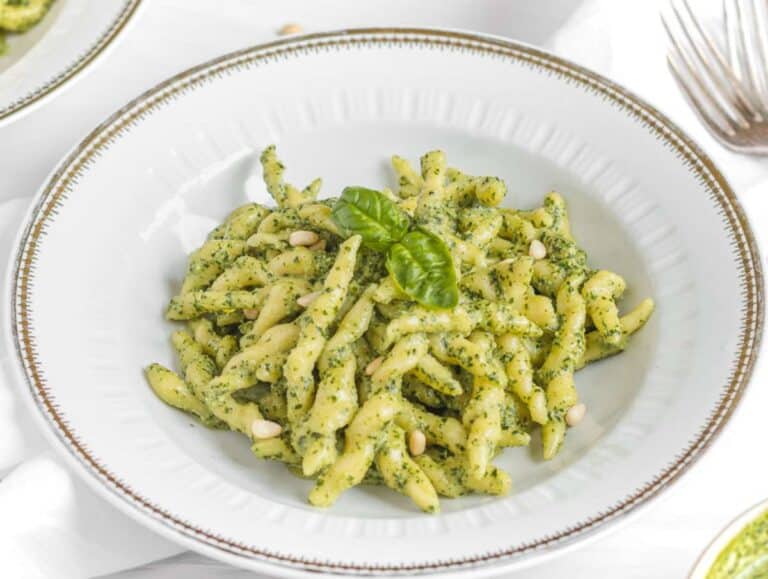
Learn how to make trofie pasta at home with this simple, step-by-step recipe, so you can enjoy an authentic taste of Liguria and create fresh handmade pasta that pairs perfectly with pesto alla Genovese.
For more traditional Italian pasta recipes, check out our homemade orecchiette pasta, cavatelli, gnocchi, and sweet potato gnocchi.
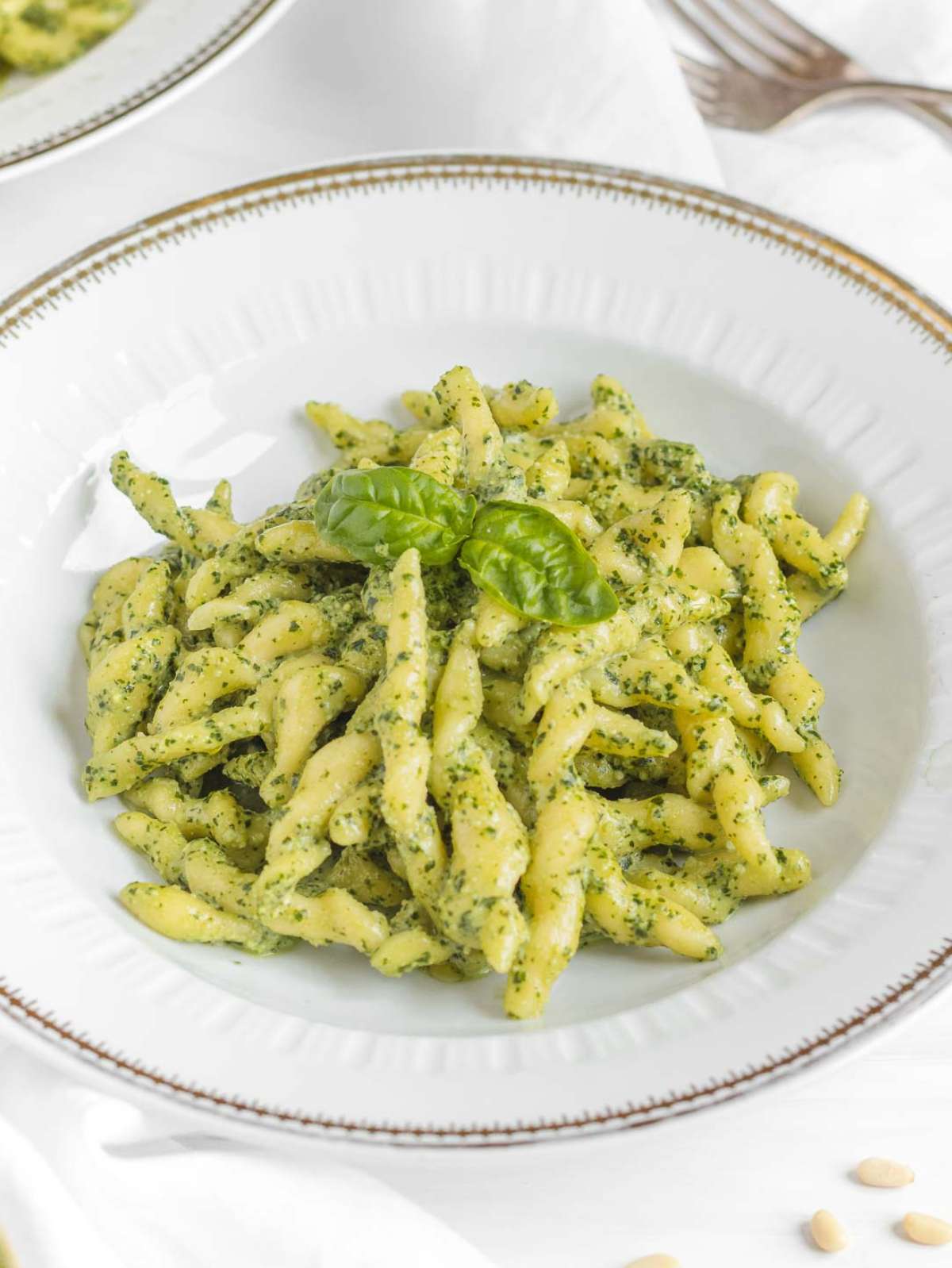
What is Trofie Pasta?
Trofie is a traditional pasta from Liguria in Northern Italy. It’s short, thin, and gently twisted by hand, giving it a chewy, rustic texture. This shape is famously served with pesto alla Genovese, making it one of the most iconic regional Italian pasta recipes. Simple to shape and fun to make, trofie is perfect for homemade pasta lovers.
Video Tutorial by Nico
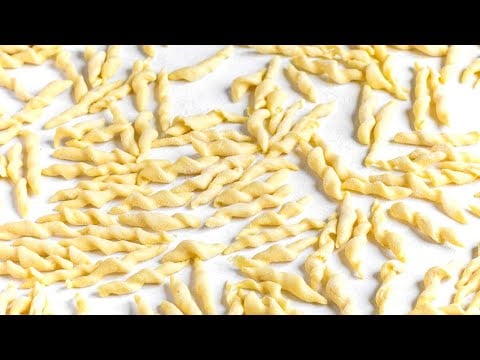
Ingredients
Full ingredients and substitutions are in the recipe box below.
- Semolina flour: called semola di grano duro rimacinata in Italian, this durum wheat flour is essential for the chewy bite of homemade trofie pasta. If unavailable, mix half all-purpose with half bread flour. For a nuttier taste, try spelt flour.
- Water: warm water hydrates the flour more effectively, helping you form a smooth dough.
- Olive oil (optional): a drop makes the dough more elastic and easier to roll. Skip it for a purist version, or replace with avocado oil for a neutral taste.
- Flour for dusting: all-purpose works perfectly to keep the pasta from sticking. For extra authenticity in a regional Italian pasta recipe, use fine semolina instead. Cornmeal can be a fun substitute for a slightly rustic texture.
- Serving suggestion – pesto alla Genovese: trofie are traditionally tossed with basil pesto from Genoa. If basil is out of season, try arugula pesto or a parsley-almond pesto. This pairing is what makes trofie such a beloved easy homemade pasta dough dish in Liguria.
- Equipment: All you need is a clean work surface — a wooden board works best since it grips the dough for shaping trofie. To make the pesto alla Genovese, a simple blender does the job beautifully.
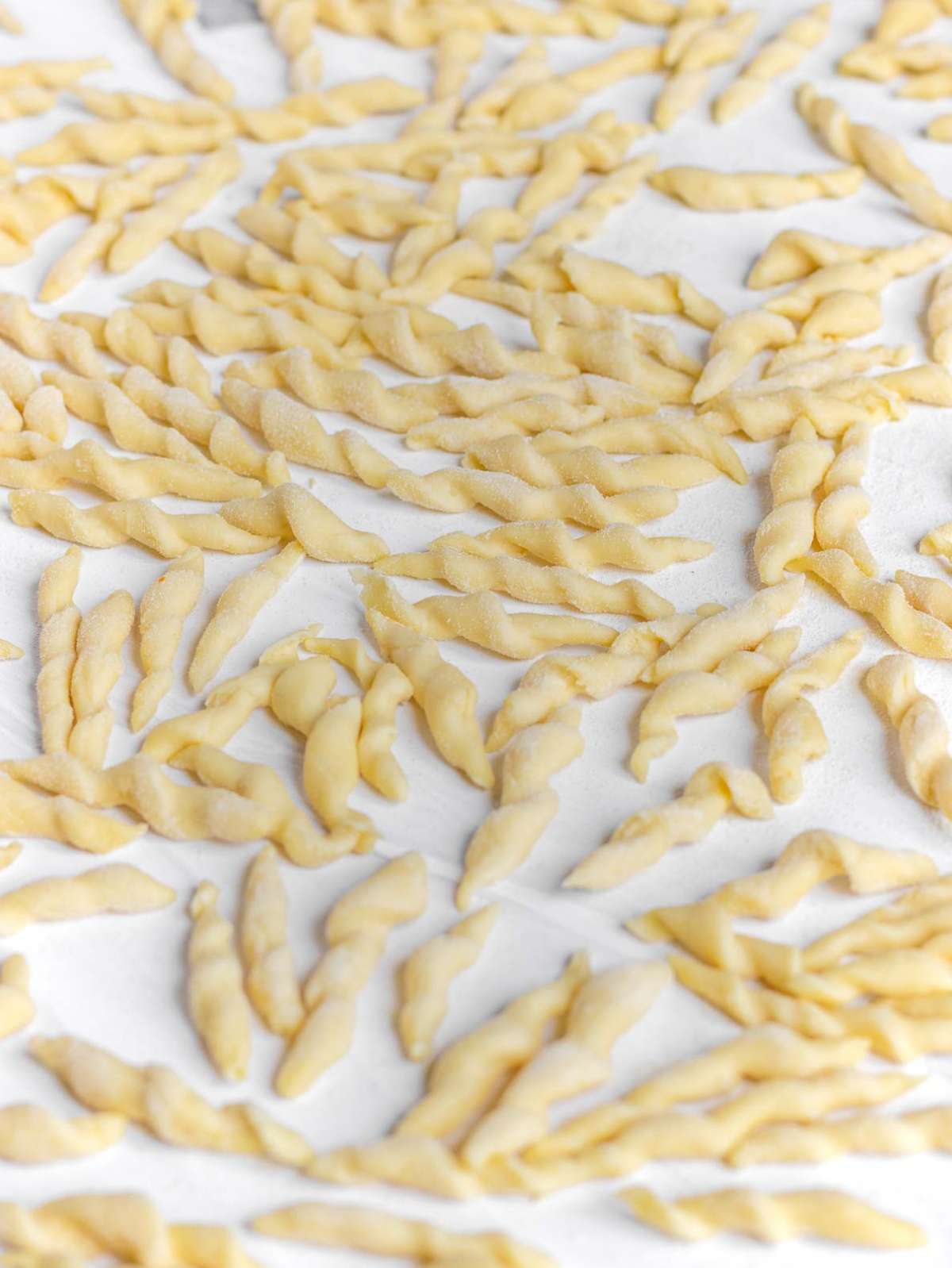
How to Make Trofie Pasta
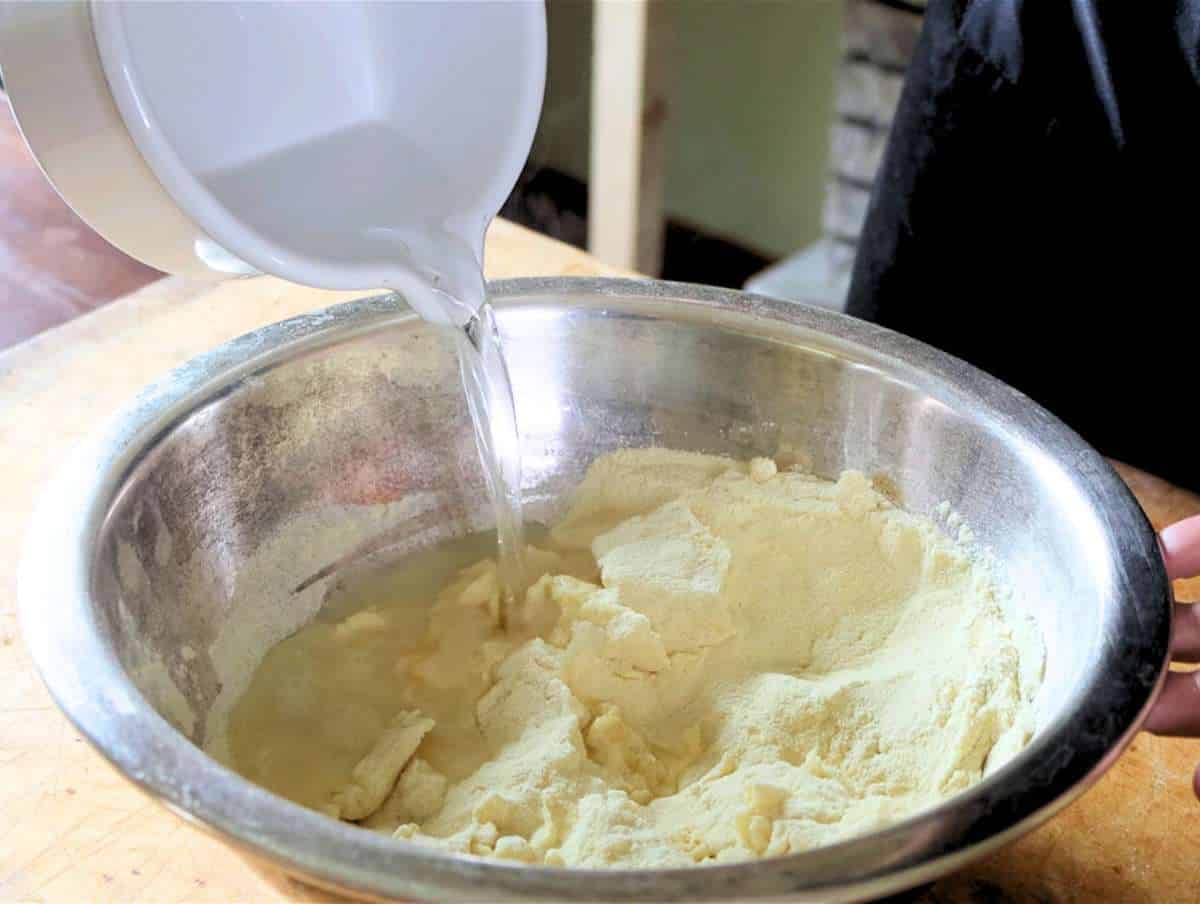
Step 1 — Make the Dough
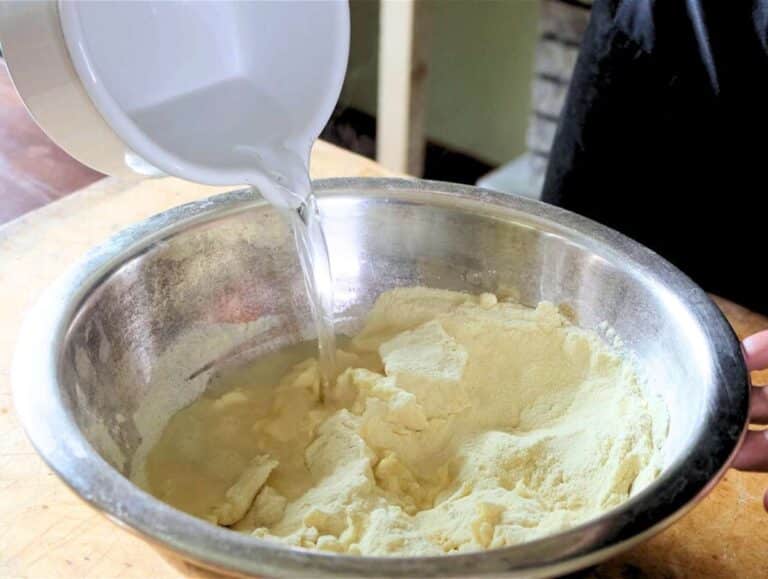
Add semolina flour to a bowl. Pour in about three-quarters of the warm water and mix with a fork until the flour absorbs the liquid. This is the beginning of trofie pasta from scratch.
Step 2 — Knead Until Smooth
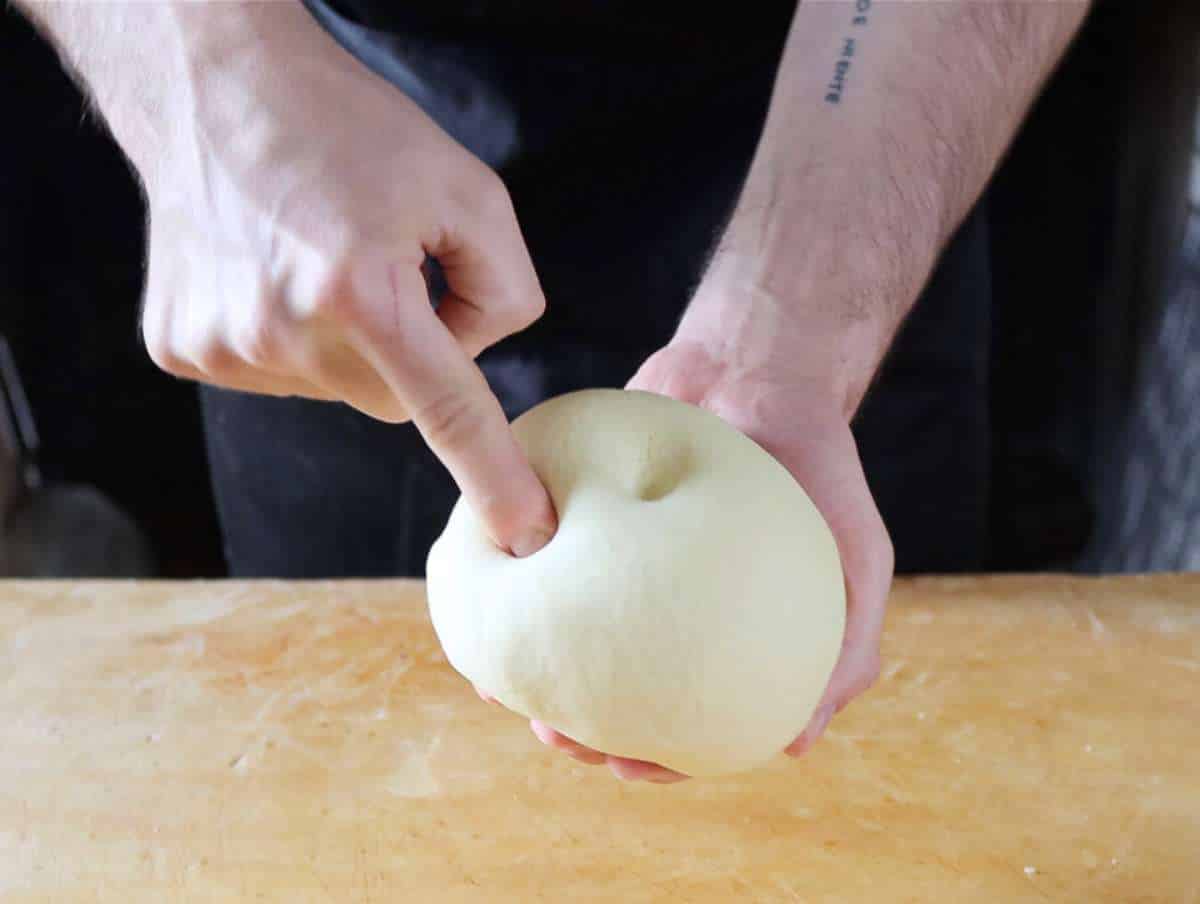
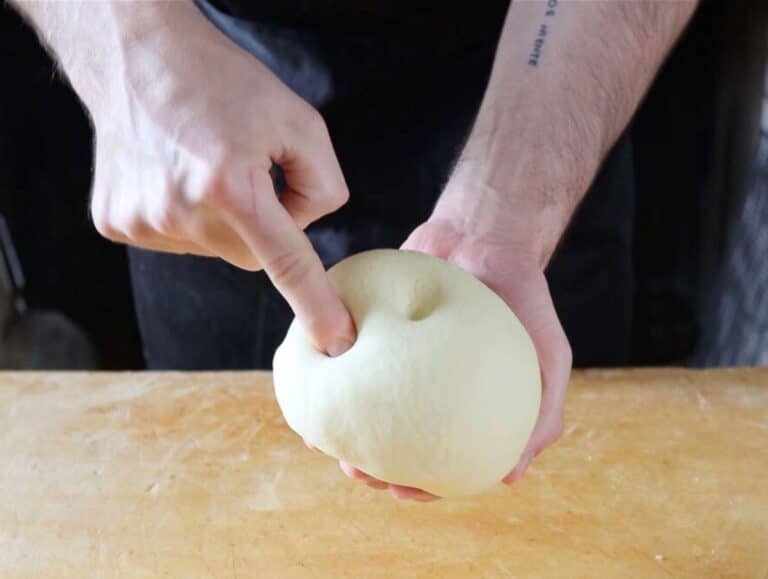
Turn the shaggy dough onto a work surface. Knead with the heel of your hand for 8–10 minutes. If it feels dry or sandy, wet your fingers with the remaining water and keep kneading. The dough should feel like soft Play-Doh—smooth, compact, and elastic.
Cover the dough and let it rest for 10 minutes. Resting relaxes the gluten and makes shaping easier.
Step 3 — Shape the Trofie (See Video)
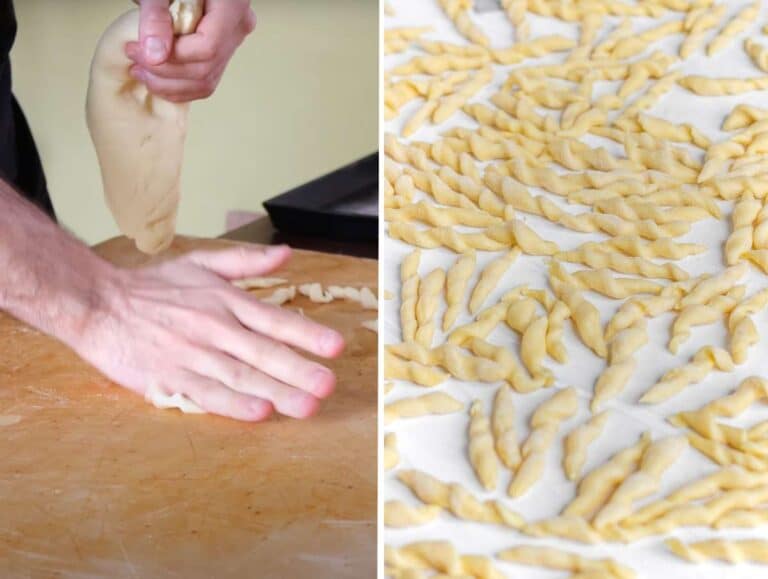
Hold the dough in your left hand. With your right hand, pinch off a small piece, place it under your palm, and roll it away from you, then back toward you, flicking your wrist so the piece twists and tapers at the ends. This is how to shape pasta by hand—simple and satisfying. Set the trofie aside on a clean surface and dust lightly with semolina so they don’t stick together.

Step 4 — Cook the Pasta
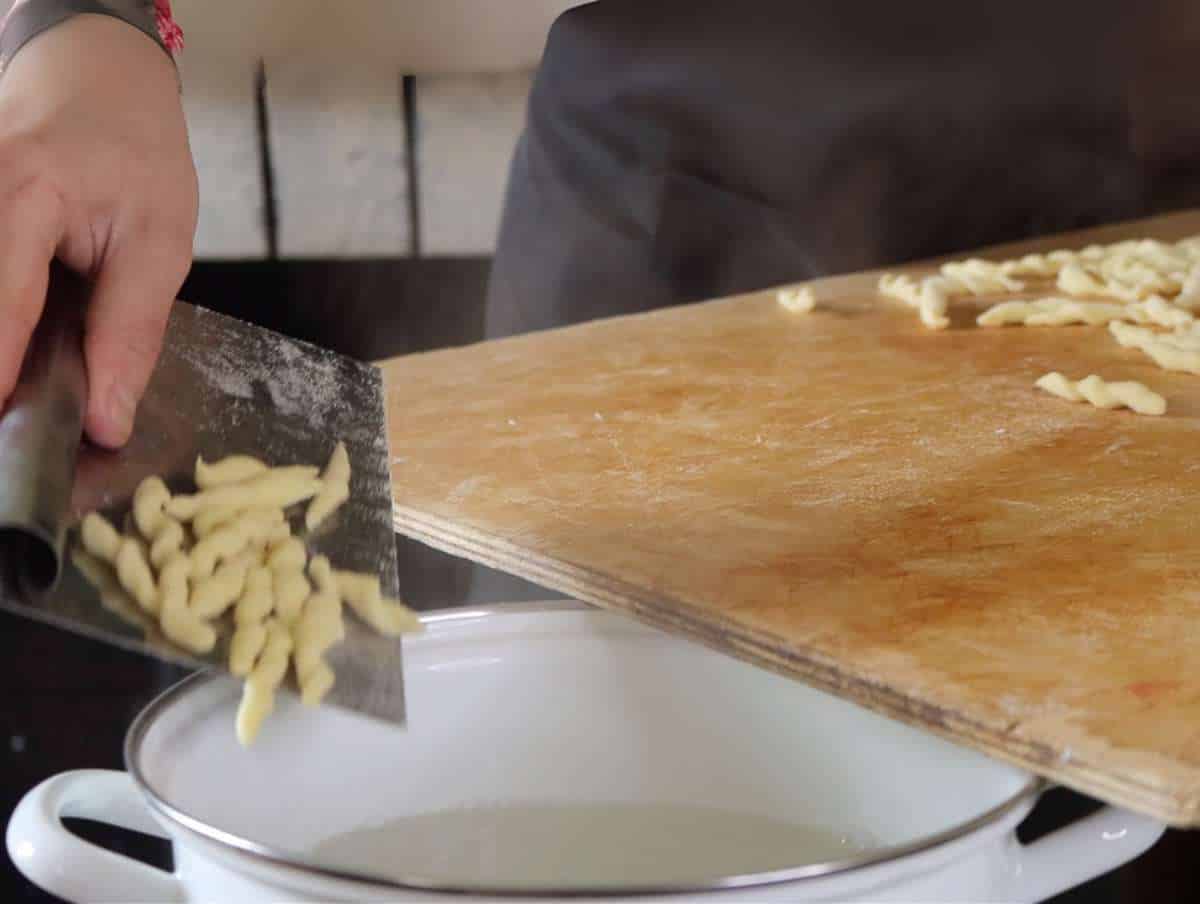
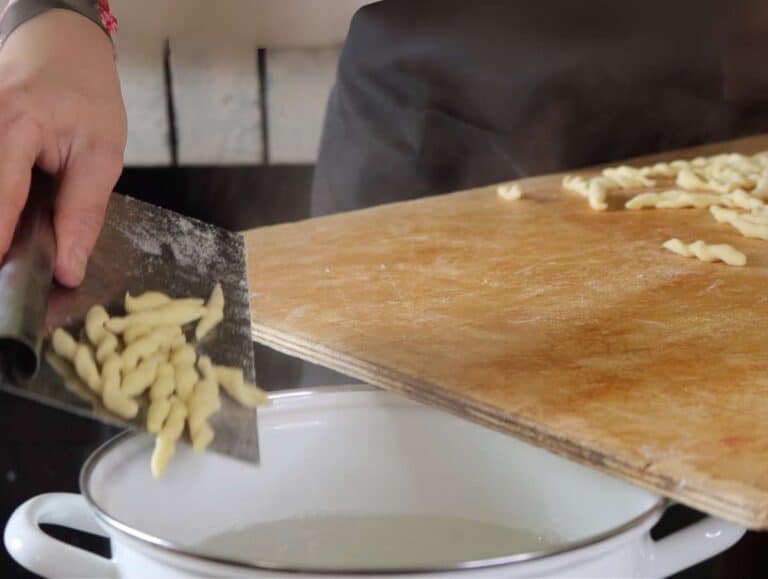
Bring a large pot of salted water to a boil. Drop in the trofie and cook until they float and look glossy with a firm bite. Reserve a cup of pasta water before draining.
Step 5 — Sauce and Serve
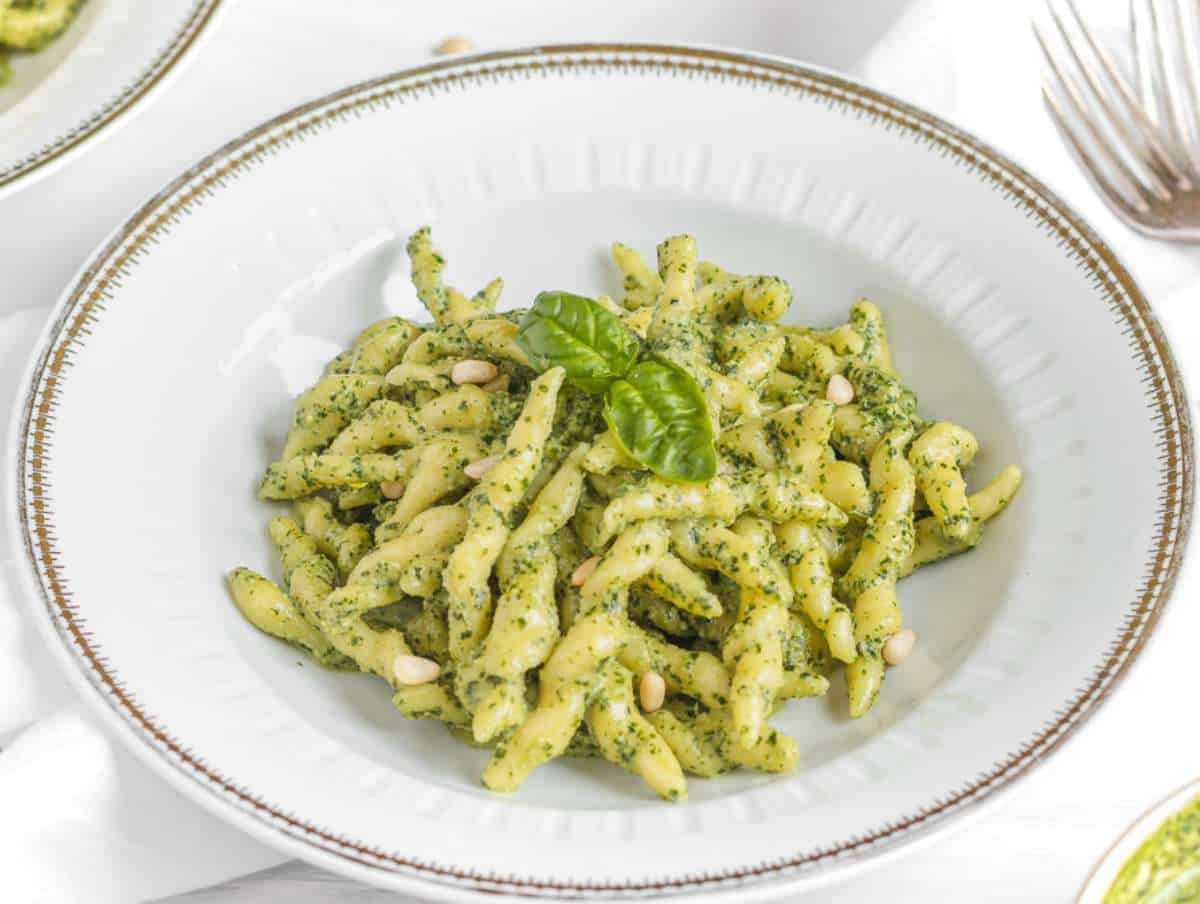
Toss the hot trofie in a mixing bowl with pesto alla Genovese, adding a splash of pasta water to loosen the sauce and create a silky finish. Serve immediately while the pasta is bouncy and tender.
Tips
- Use fine semolina flour: It’s called “semola di grano duro rimacinata” and imported Italian brands like DeCecco, Rummo, and La Molisana are easy to find in larger supermarkets or Italian delis. It gives the right chewy bite and golden color. If you can’t find it, mix half semolina and half all-purpose for a solid base in your handmade Italian pasta recipe.
- Don’t rush the kneading: Ten minutes of firm kneading develops the gluten, making the dough elastic and easier to shape.
- Rest the dough: Even a short 10-minute rest helps relax the gluten so you can twist the pasta without tearing.
- Work with small pieces: Trofie are easier to shape if you pinch off little nubs instead of rolling long ropes first. This helps keep your homemade trofie pasta consistent in size.
- Dust with semolina as you go: A light coating prevents the shaped pasta from sticking to each other or to the board.
- Cook in plenty of salted water: Trofie expand as they cook, so give them room. The water should be “as salty as the sea” for the most authentic Italian pasta made at home.
- Save pasta water for the sauce: A splash of starchy water helps pesto cling to the twists and creates a silky, restaurant-quality finish.
- Serve right away: Trofie are at their best hot from the pot—bouncy, tender, and full of flavor.
Frequently Asked Questions
Trofie is a traditional Ligurian pasta, and the most classic pairing is pesto alla Genovese, a bright basil pesto from Genoa.
No! You only need your hands and a clean work surface. A wooden board helps with grip, but it’s not essential.
Your dough should feel soft, elastic, and slightly tacky, like Play-Doh. If it’s too dry, add a few drops of water; if too sticky, dust with a little flour. This balance is what makes easy homemade pasta dough work every time.
Yes. You can shape the pasta, dust with semolina, and refrigerate it for up to a day. For longer storage, freeze on a tray until firm, then transfer to a freezer bag.
Fresh trofie cooks quickly, usually in 3–5 minutes, depending on thickness. They’re ready when they float and look glossy but still have a firm bite.
More Italian Pasta Recipes
- Pastina
- Lentil Pasta
- Spaghetti all’Assassina
- Sun-dried tomato pasta
- Broccoli pasta
- Spaghetti aglio olio
- Rigatoni arrabbiata
- Pasta puttanesca
- Pasta alla Norma (eggplant pasta)
If you tried this Homemade Trofie Recipe or any other recipe on our blog, please leave a 🌟 star rating and let us know how it goes in the comments. We love hearing from you!
How to Make Trofie Pasta (Handmade Ligurian Pasta Recipe)
Video
Ingredients
For the trofie
- 2 cups semolina flour — like De Cecco's Semola di Grano Duro Rimacinato
- ¾ cups warm water you might need a little more or less depending on weather and type of flour
Instructions
- Make the Dough: Mix 2 cups semolina flour flour with most of the ¾ cups warm water until absorbed.

- Knead Until Smooth: Knead 8–10 minutes until soft and elastic, like Play-Doh. Cover and rest 10 minutes.
- Shape the Trofie: Pinch off small pieces and roll under your palm so they twist and taper at the ends (see video below).
- Cook the Pasta: Boil in salted water until they float and look glossy. Save a cup of pasta water.
- Sauce and Serve: Toss in a bowl with pesto alla Genovese, loosening with pasta water for a silky finish. Serve hot.
Notes
- Semolina flour → essential for chewy bite. Sub half all-purpose + half bread flour, or spelt for nutty flavor.
- Water → warm hydrates best. Sparkling water makes dough lighter.
- Olive oil (optional) → adds elasticity. Skip it, or swap with avocado oil.
- Flour for dusting → use all-purpose, fine semolina for tradition, or cornmeal for rustic texture.
- Serving suggestion → toss with pesto alla Genovese, or try arugula or parsley pesto.
- Choose fine semolina for chewy bite and golden color; mix with all-purpose if needed.
- Knead 10 minutes to build elasticity and make shaping easier.
- Rest the dough for at least 10 minutes so it twists without tearing.
- Pinch small pieces for even, consistent homemade trofie pasta.
- Dust with semolina to keep shaped pasta from sticking.
- Cook in salty water “like the sea” for authentic Italian pasta made at home.
- Save pasta water to help pesto cling and turn silky.
- Serve immediately for bouncy, tender pasta at its best.
Nutrition
Hi! We are Nico & Louise
We're here to share easy, healthy, and delicious recipes 🌿✨.
Welcome to our blog, we are glad you are here.
I made the trofie yesterday for my husband’s birthday and he loved it! It was fun to make, especially because I had a glass of wine and listened to Tiziano Ferro while forming the pasta. Thank you so much for this recipe.
Lenore, that sounds like a wonderful evening – and a romantic choice of music!?
I’m so happy you both enjoyed the trofie, thank you very much for coming back to leave a comment.
Kindest, Louise