
Butternut Squash Risotto
Servings: 5 people
- 2 cups (400 grams) Arborio rice
- 1 tablespoon (14 grams) extra virgin olive oil
- 1 white (100 grams) onion finely chopped
- 2 cloves garlic minced
- 5 cups (1.5 pounds) (700 grams) butternut squash peeled and cut into 1/4 inch dice
- ½ teaspoon salt
- ½ teaspoon black pepper
- ½ cup (120 grams) white wine
- 8 cups (2 liters) vegetable broth
- 4 tablespoons (56 grams) butter (or dairy-free butter)
- ½ cup (50 grams) grated parmesan (or dairy-free cheese)
- 1 handful sage leaves (3 or 4 per serving)
PREPARATION
- Peel and dice the butternut squash into ¼ inch (0.6 cm) dice. Finely chop the onion and mince the garlic. Set aside.Heat broth in a large saucepan until almost boiling temperature. Keep hot throughout the recipe.
TOAST THE RICE
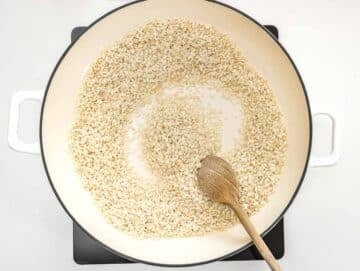
- To a large dutch oven or skillet, add the risotto rice and stir on medium heat for about 1.5 minutes. Transfer the rice into a bowl and set it aside for later.
COOK THE RISOTTO
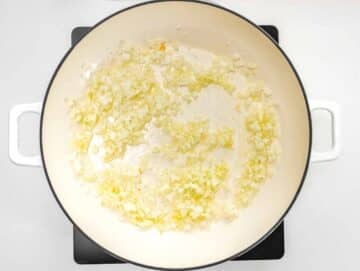
- To the same dutch oven, add the olive oil and chopped onion. Fry gently for 2 minutes until the onion is translucent.
- Add the diced butternut squash, minced garlic, ¼ cup vegetable broth, salt, and pepper, and sauté on medium heat for 5 minutes.

- Add the toasted risotto rice and stir on medium-high heat. When the pan is hot and the rice starts to stick, add the white wine.

- Stir until the wine has evaporated completely, then add two ladlefuls of vegetable broth and stir gently till the rice absorbs the broth.Keep adding two ladlefuls of liquid at a time while stirring almost continuously until the rice is cooked al dente (15 to 18 minutes).

ADD BUTTER AND CHEESE
- Turn the heat off, let the rice cool down for one minute, then add butter and grated parmesan cheese.

- Stir until butter and cheese melt in the rice. If the risotto gets too thick, add a little more vegetable broth.

- Serve a ladleful or two of creamy butternut squash risotto per person, positioning it at the center of the plate and letting it spread out on its own.Top with a couple of leaves of sage and a twist of freshly ground black pepper.

Nutrition information is an estimate for one portion of butternut squash risotto out of five portions.
TIPS
1. Toasting the rice is important to ensure that the rice keeps its shape and bite once cooked. Toasting needs to be done in a dry pan; that's why we need to do it before we add the butternut squash.
2. If you want to make risotto oil-free, you can fry the onion in a dry dutch oven on low heat, moving it around the pan often. The onions will release natural oils that will prevent the onion from sticking.
3. Deglazing the pan with dry white wine adds acidity to the dish, making it more flavorful.
4. There is no need to puree or blend the butternut squash with a food processor or blender. Some of the squash will naturally melt and color the rice without making it too soupy.
5. Risotto should have a creamy texture and a consistency that is not too thick nor too soupy. The rice grains should be creamy but not mushy, and have a clear bite. You should be able to eat it with a fork.
6. To garnish, you can fry the sage in a tablespoon of extra virgin olive oil, on a nonstick pan, for one minute then add it on top of the risotto.
